Showing posts with label disney. Show all posts

Tuesday, July 4, 2017

Disney's Moana: Moana (ENFJ) *Spoilers*


Extroverted Feeling: Moana easily takes on the role as leader of her village, as their strength, as well as looks to others for guidance. She confides to her grandmother how she feels, openly scolds beings more powerful than herself, and generally is straightforward about her opinions. She tries to get Maui to open up to her so she can get to know him better, and offers him encouragement. She manipulates him into helping her by playing off his emotions (telling him humans blame him for what's happening to the islands, knowing he craves their adoration).


Introverted Intuition: Moana wants to let go of the way they've always done things on the island and search for a better way to find food for the village. Once she finds out her people were once voyageurs, she wants to know why that was, and dreams of returning to that lifestyle. She knows she was chosen by the ocean to return the Heart of Te Fiti (which she temporarily doubts, but after some encouragement from her grandmother [Fe] goes back to following her destiny). She correctly intuits what really happened to Te Fiti and that the lava monster won't hurt her.


Extroverted Sensing: Moana is ready for adventure and takes things head-on. She sails by herself with little experience, jumps out of a cave to catch up with Maui, does some impressive parkour when she retrives the stolen Heart of Te Fiti from the coconut pirates, and navigates around the lava monster to return the Heart. She uses what's around her (like biolumenscent algae to make a fake Heart to distract Tamatoa with) to work with. She is a little careless sometimes as well, like how her teasing Maui leads to the pirates finding them immediately, or almost getting seriously hurt when she tries sailing for the first time.


Introverted Thinking: Moana uses this one less, but she does question things Maui says, wants to know why he is the way he is.

Friday, November 4, 2016

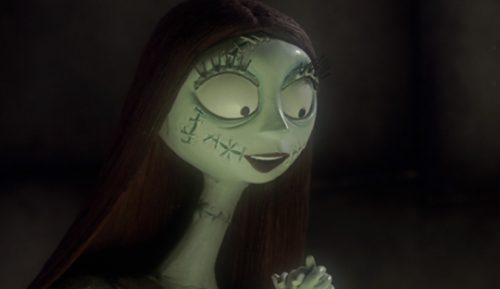
(Late) Halloween MBTI- Disney's The Nightmare Before Christmas- Sally the Ragdoll (ISFP)


Introverted Feeling (Fi)- Sally is independent, and guided by an internal set of values that lead her to oppose the idea of adopting Christmas in Halloweentown, even though the man she loves is doing it, along with the whole town. She doesn’t present a rational argument as to why he shouldn’t do it, but rather is against it because it just feels wrong to her, though she doesn’t oppose her opinion on others. She doesn’t like the lifestyle Dr. Finkelstein has forced on her, but she still cares for him and rebels quietly when she can’t take any more. Sally has trouble telling Jack she likes him, instead showing her affection through acts (bringing him dinner and wine when he forgets to eat, helping to make his costume, going to save Sandy). She has a deep bond with Jack, even though she thinks he only sees her as a friend, and would do anything for him.

Extroverted Sensing (Se)- Sally is somewhat impatient, and is bored being locked up all the time. She would rather be doing something and be out with others in town and with Jack. She has a reckless streak, continuously sneaks out, fearlessly leaps out a window and gets herself torn up, and impulsively runs off to rescue Sandy (and gets herself captured). However, she improvises very well, pouring a fog potion in the fountain to try to prevent Jack from leaving and using her detachable limbs to get herself out of fixes or cause diversions, and is a talented potion-brewer. As nobody listened to her warning, she realizes she needs to take action herself.

Introverted Intuition (Ni)- Sally envisions a future of herself and Jack together, but is too shy about her feelings to work towards that vision. She gets a premonition of Christmas ending in disaster and worries about what Jack has gotten everyone into, though she can’t articulate to anyone why it’s true. She wants to enjoy the present moment of the Christmas preparations and fun (Se), but can’t shake off her bad feeling. While she is generally considerate of the future, she sometimes doesn’t see past the current moment (like a longer-term plan than just sneaking out of home all the time just to get dragged back home) or consequences (getting caught in Oogie’s lair).

Extroverted Thinking (Te)- Sally is very sensible. She reasonably tells the doctor why she wants to leave, pointing out he is perfectly capable of creating others like her. Unlike Jack, a strong Ti user, she doesn’t stop and analyze a situation; she just acts (creating foggy weather, going to save Sandy Claws so he can stop Jack, distracting Oogie). She acts on her emotions, and won’t just come out and tell Jack she loves him. She also isn’t always assertive with people when it would benefit her to be.


Note: I know INFJ is a popular typing, due to the Ni-filled “Sally’s Song”. I originally typed her as an ISFJ, then as an INFJ, then considered INFP. But I’ve realized she is definitely driven by Fi, and uses far too much Se in what she does to be an INFJ. Her Ni also isn’t as strong as a Ni-dom’s would be (Also, using intuition =/= an Intuitive. Sounds contradicting, but Sensors use their intuitive functions, too.).

Friday, August 19, 2016

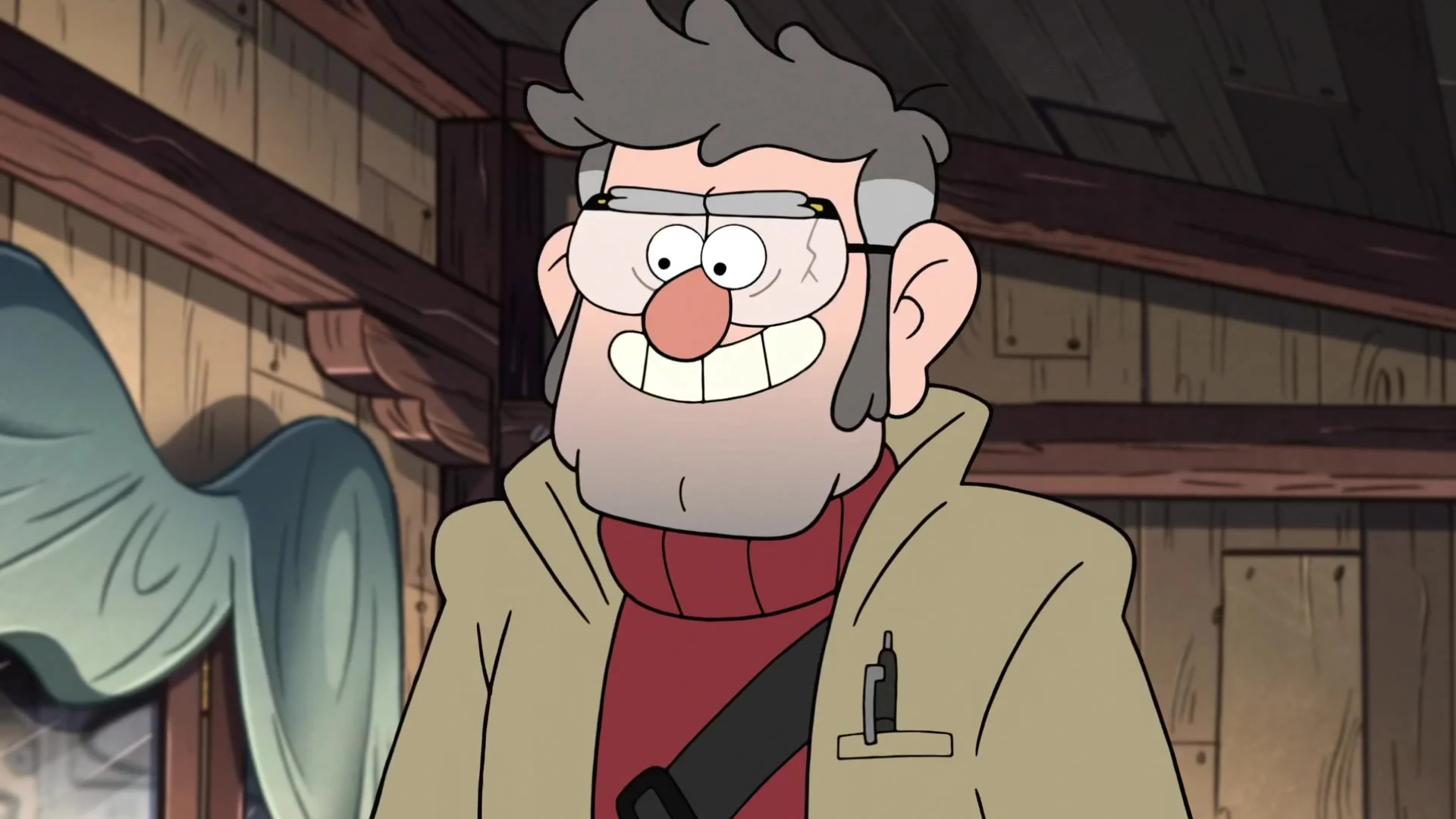
Gravity Falls- Ford Pines (INTP) [Spoilers]


Ti- The endless mysteries of the world captivate Ford to no end, and he’s forever chasing them- always wanting to know more, always thinking, and dedicating himself to solving life’s puzzles. He figured out how to make a lightbulb that never burns out in just a few hours! He is able to be make tough decisions to achieve his ends, works well under pressure, and is tactical (like placing a metal plate in his head to keep Bill Cipher out).  

Ne- Ford loves the endless possibilities in his line of work. (examples) He collects highly dangerous objects because they fascinate him (even lets his young nephew get ahold of them). He’s so caught up in the bigger picture that he rarely sees the potential consequences of his actions- like, say, making a deal with a dream demon or carrying around the infinity-sided dice, and this open-mindedness makes him rather naive, despite his great ingenuity.

Si- As a scientist, Ford will patiently study as much as he can about whatever he’s interested in to glean all the details of it. He wants his old life back- with his brother out of his life for good so he can continue studying anomalies. He wants Dipper to carry on his life’s work and sees him as a younger version of how he used to be.


Fe- Growing up, he felt very hurt his extra-fingered hand and intelligence gained him mockery from other kids. Unlike Stan, who was also hurt but cared far less what other people thought, Ford wanted acceptance and to connect with others, which he eventually does with Dipper. As an adult his need to be admired gets exploited by Bill. He believes in doing things for the greater good and tends to accidentally belittle others’ feelings, leading him to appear quite cold to Stan, who operates on a very different and very personal moral code (Fi-aux). 

Disney's Beauty and the Beast- Belle (ISFJ) [Retyping]

Taken from But We've Met Before, my Disney blog.


Introverted Sensing (Si): Though Belle says she wants excitement and adventure, she never actually does anything about it. She stays in town, performing the same routine every day: go into town, get books, read them, do some chores around the house. It bores her, but it's what she knows and is comfortable with. Later, she eventually falls into the same routines, reading, taking walks, feeding the birds; the only difference is she's doing them in a magic palace now! Everything she concludes about her stay in the enchanted castle, she knows from her fairy tale books. In "Something There", she muses over her feelings for the Beast that differ so greatly from what she has come to learn about him (well, he's BEEN a big, terrifying brute with a bad temper- why should I care about him so much now?).


Extroverted Feeling (Fe): Belle is well-mannered, very proper, and though she's not stimulated in her village, she never makes a big fuss. It bothers her a little to not fit in with her community. She thinks Gaston is boorish but never snaps at him, just politely engages with him, even when he damages her book. She is able to flatter Gaston to get rid of him, and similarly manipulates Lumiere and Cogsworth so she can sneak off to the West Wing. However, overall, she doesn't always express her deeper emotions (though she WILL assert herself when she needs to) if she thinks it will hurt others, and this almost cost the Beast his life. She doesn't always try to empathize with the other person (but still sometimes expects others to somehow just know how she feels).


Introverted Thinking (Ti): Belle is intellectually curious and greatly enjoys learning. She sees past appearances, which is why she is willing to stay with the Beast after all despite him frightening her. She knows that just because Gaston is handsome and popular doesn’t necessarily mean he is a kind person. The Beast, like Gaston, was rude and boorish to her, but she notices his kindness when he gives her a better room and then rescues her. Belle isn’t necessarily good at reading people, but she is good at analyzing situations. When she wants Gaston out of her house, she doesn’t tell him to go, but finds a way to him to the door and make him leave anyway. She is fascinated by the many secrets the enchanted castle might hold.


Extroverted Intuition (Ne): Belle is dreamy, yearning to escape her small-town boredom and have "adventure in the great, wide somewhere", never specifying exactly what kind of adventure it is she wants; she just likes the idea of seeing things and getting away from her village of "little people".  She loves books, especially fairy tales, because they spark her imagination. She is able to see different sides of people: the rude side of Gaston nobody else in town seems to see, and the gentleness beneath the rude, gruff exterior of the Beast. She wonders what the rose is, and what's its connection to the Beast (or the young man in the portrait, for that matter)?


Reason for retyping: After discussing it with isfjmel-phleg (my MBTI source, I suppose?), I stand corrected; ISFJ makes more sense. She makes far more decisions based on how she is feeling than an INTP would, even though her Ti and Ne are quite well-used.

Monday, March 28, 2016

Disney's Sleeping Beauty: Aurora (INFP)

Contrary to what some in the Disney fandom may think, Aurora definitely has a personality- even a well-rounded one, I dare say. Those who limit their definition of personality to screen time don't seem to have a true grasp on what personality really is. We learn quite a lot about Aurora from her short "I Want" song alone, much less the rest of her screen time. (Also: thanks and credit to Audrey at throughtheroses.tumblr.com!)


Introverted Feeling (Fi): Aurora is a kind girl with strong emotions she keeps inside herself, not always wanting to share how she feels (such as her restlessness and wanting to meet someone). She is comfortable just sitting (or dancing) in silence with those she's fond of, not needing to talk. When faced with the shocking truth of her heritage and being forbidden from seeing the one person she had romantically connected with, she feels quite wounded and doesn't try to hide it, and just sort of gives up after that. Upon meeting her parents at last, she says no words, but simply embraces them warmly.


Extroverted Intuition (Ne): Aurora is imaginative, philosophical, and has a creative side. She creates a metaphor of her life when she observes a pattern with the birds and wonders if there's a connection between them and her own life ("I Wonder"). Despite holding fast to her dreams, Aurora never actively pursues them; instead stays at home and creates a whole little fantasy world with her animal friends. Besides, she's certain her dreams will come true without needing to actively pursue them- and she's right!


Introverted Sensing (Si): Aurora believes in what she's already learned about dreams (that if you've had one repeatedly, it will come true). She is cautious; she doesn't just jump into a relationship with Phillip, but instead decides to meet him back at her cottage, seeing it as the safe option in this new potentially unsafe situation, as it offers the protection of her aunts. She's not at all excited about the luxury of being a princess- she just wants the only life she ever knew back.


Extroverted Thinking (Te): Aurora doesn't use this one much; she can be passive and indecisive at times ("Never!" "Well, maybe someday!" "Oh, no, this evening!"). But she does speak up to the fairies about her own life, and had previously made plans to get to know Phillip better in the safety of home. She doesn't like that her aunts won't treat her like an adult despite her responsible nature.

Sunday, February 14, 2016

Disney's Pocahontas- Pocahontas (ISFP)


Introverted Feeling (Fi): Pocahontas feels strongly about most things, but rarely shares these feelings with anyone but a select few she is very close to. She is deeply offended by John's calling her people (and by extension, her) "savages", but instead of talking it out with him, she silently leaves in a huff. Pocahontas hates conflict and will usually go out of her way to avoid it. She wants peace between her tribe and the white explorers more than anything and is willing to throw herself in harm's way if it means achieving it, because she's so steadfast in her values. She feels a need to stay true to herself and find her own way in life, even if it's not what anyone in her tribe does.


Extroverted Sensing (Se): Pocahontas is free-spirited, loves a thrill, and new sensations- diving off a towering waterfall, running through the woods, spying on the strange settlers. She's deeply in tuned with her environment ("But I know every rock and tree and creature has a life, has a spirit, has a name"), and shows John how to experience the most out of it ("Colors of the Wind" is a great example of Se, really). She is excited to hear about how different London is from the home she's always known.  She can be impulsive and quick to take chances when she sees them. She doesn't want to take the path everyone else has taken but instead chooses the rocky, more dangerous stream in "Just Around the Riverbend".


Introverted Intuition (Ni): Pocahontas knows her dream about the spinning arrow means something- she just doesn't know what (and this is probably the biggest piece of evidence of how she is not in fact an INFJ as she's regularly typed is; a Ni-dom would probably have figured out the meaning behind the symbolism a long time ago. It takes her the whole movie to get it!). She wants to know what her destiny is, and won't settle for taking the "smoothest course" because it may be the wrong choice for her.

Extroverted Thinking (Te): Pocahontas is pretty passive, but she can stand up and take charge when pushed to it, like calmly explaining to Powhatan how she thinks she's meant to take another path, and going to save John herself through the most direct way (ie literally standing in the way of Powhatan!).

Monday, February 1, 2016

Disney's Tangled- Rapunzel [ESFJ]

I know she's always typed as an Intuitive, especially an ENFP, and it's understandable why; I had once typed her as an ENFJ myself. She does, after all, just "know" the lights are "meant for me!" But is that really indicative of someone with strong intuitive preference?

I had also mistyped Carmen Lowell from Sisterhood of the Traveling Pants as an ENFJ for similar reasons- she sees signs in everything and believes in fate, much like Rapunzel. But both girls are ESFJs! They hold onto their own routines and traditions that are important to them, and fear change. More on this later.

Also, there's this annoying tendency to type nerdy/quirky/silly ESFJs as ENFPs, not only Rapunzel but characters like Steven Universe. Why? Their Fe is very obvious. Why must Intuitives get the credit for being imaginative when Sensors are,well, often called called creators for a reason?

Anyway, to the typing:


Extroverted Feeling (Fe): Rapunzel is very warm to everyone she meets. She's a people-person and likes to create a happy environment at home for Gothel. She is charismatic and easily inspires others- she gets everyone at the Snuggly Duckling to open up their feelings to her. She's very friendly and you'd be hard-pressed to find a single person in the movie who dislikes her at all (even Gothel goes out of her way to make her happy for her birthday). Due to the fact that she's something of a people-pleaser, this leads Rapunzel to need validation from others, and feel insecure if she doesn't have it. She can also be over-emotional, panicking when she thinks she may hurt Gothel. (Really, where do people see an ENFP's Fi in her at all?)


Introverted Sensing (Si): Rapunzel likes routine, and keeps to it everyday: chores, crafts, exercise, re-reading her books, and so on-and does these without fail, even though it all starts to bore her. She never misses the lights that appear every year on her birthday, which becomes a special tradition for her. She pays attention to details and remembers them well, like the sun symbol she's painted so much since childhood, and where exactly she's seen it before. She can be passive, doing as Gothel says and sometimes letting Flynn lead for her. She's always been taught that the outside is dangerous and believes it without questioning, because that's how Gothel has always taught her to believe.


Extroverted Intuition (Ne): Rapunzel has stayed in her tower for 18 years, only leaving when Flynn arrives and presents the possibility of leaving safely. She channels her imagination through her preexisting skills as an artist (Si). She eventually pieces together her backstory just from seeing the sun symbol. She enjoys new ideas, as shown in the "I've Got a Dream" sequence. Her lower Ne makes her very paranoid of bad outcomes, though- will Gothel be hurt? What about all the dangers in the world? Will Flynn really leave her as Gothel warns?


Introverted Thinking (Ti): Rapunzel is curious and wants to figure out who, or what, is behind the lanterns that mysteriously appear every year on her birthday. She is shown to enjoy the logical game of chess and solving puzzles at home. Once she pieces together the truth of her heritage, she is able to objectively look at her "mother" for the first time. She sometimes over-analyzes her own feelings, and can sometimes find creative solutions to problems, like using her hair as a lasso or underwater light. She rationalizes her desire to leave the tower, even while admitting it would be immoral to defy and deceive Gothel, so she won't feel guilty about it. However, she primarily prefers to make decisions based on how she feels.

Sunday, January 10, 2016

Disney's Snow White and the Seven Dwarfs- Snow White (ENFJ)


Extraverted Feeling (Fe): No doubt about it, Snow White is warm, caring, and a social butterfly. She enjoys engaging with others, even the forest animals, and having parties. When she first arrives at the cottage, she assumes it must be orphan children living there and sympathizes with them. She immediately warms up to the Dwarfs and takes over their little cottage like it's her own business as a mother figure. She's outspoken and honest. After being treated like a slave by her only family member, she still wishes to find love and hear "the nice things he'll say". In addition to that, her prayer to make Grumpy like her indicates she needs affirmation from others. She is respectful of others, always mindful of her manners, and likes to tease her friends a little bit to make them laugh, never taking offense herself when Grumpy is rude to her. Her worst flaw in the iconic apple scene is that she is polite to a fault: she can't just tell the "poor old lady" no and be rude! She knows not to let strangers in but her heart reaches out to someone she sees as suffering and has to help them.


Introverted Intuition (Ni): Snow White is very dreamy, deeply romantic, and just knows that her prince will find her while she's in hiding (and she's right!). She likes to daydream about her hopes and dreams while she works hard. She believes in fate and magic and after some initial hesitation, she takes the old peddler up on her offer of the magic wishing apple, with its promise to make her dreams come true. She's optimistic to a fault and trusts her instincts, like letting the old lady into the house, despite the dwarfs' warning and the animals' protests.

Extroverted Sensing (Se): Snow White can be a little impulsive. Like I said, her first action is to let the old lady into the house without really thinking, and then after some nervousness decides to take a chance and eat the apple to get what she wants. She likes to make herself look good and is embarrassed to have her crush see her in dirty rags. She likes to bake and thinks giving Grumpy a delicious pie might cheer him up. In fact, she convinces them to let them stay by trying to appeal to their sweet tooth!  She's observant and notices how small and dirty the place is and draws conclusions based on that. She's not very adventurous but isn't afraid of being forced out of her comfort zone.


Introverted Thinking (Ti): Snow White tends to make more emotionally-based decisions, but she is analytical, deducing who must live at the cottage and easily figures out which Dwarf Grumpy is, sarcastically (if sweetly) pointing it out.

Saturday, January 9, 2016

Disney, MBTI Stereotypes, and Biases- A Pre-Note

I know, you all think she's an ESFJ (or for some reason ISFJ- where does anyone see "introvert" in her at ALL, I ask you? That girl is one outspoken, party-loving little boss) but after much studying I think while she is an obvious Fe-dom, there's less evidence for her being a Si-aux and I see more Ni than Ne.

I'd also like to take the time to talk about MBTI stereotypes. Why is she stereotyped as an ESFJ? Not usually because people think she uses Fe-Si-Ne-Ti the most, but because "she's so nice and motherly and girly and traditionally feminine and doesn't rebel against her abusive stepmom, CLEARLY she can't be anything else!" I've also noticed that Cinderella (more understandably) and Aurora (much less understandably) get typed as ISFJs a lot too for no better reason other than more or less what I mentioned above. It is always said like a lazy guess, like the typer in question couldn't be bothered to really analyze them and consider that they may not be ISFJs just because they are "nice" and "passive" (which Cinderella and Snow certainly aren't, and that kind of victim-blaming should appall any rational person, I should think. As for Aurora, what is she passive about? She wants more out of life but her current one is still pretty happy. You people just want her to rebel against nothing for the sake of rebelling? OK, rant done...).


xSFJs tend to get the most stereotyping and hate in the MBTI fandom. Coincidentally, those three princesses have gotten the most stereotyping and hate in the Disney fandom (and especially from critics who have never seen their movies since age three and just immediately dismiss them for failing to be as flawless as newer princesses). I think biased, immature people and especially those who don't understand MBTI have a tendency to purposely type their least favorite characters as their least favorite types. Sometimes it's partly because they do not really get MBTI types and how you're supposed to type based on the cognitive functions (Fe, Fi, Te, Ti, etc.) and NOT the preferences (E, I, T, F, etc.) and sometimes the people know perfectly well what MBTI is about and childishly just slap their most disliked type onto a character they can't stand for whatever reason. These people are usually the ones who are offended to discover they may share the same personality type as a character they dislike and cheer when they think they share it with a favorite character. (I'm not perfect; in the past I've not always been much better).

MBTI is, of course, just a tool used to help you understand yourself and other people better. It does NOT define you. You don't need to see MBTI as your whole identity. So why am I saying this? While it is indeed "just" a tool, it's one some people seem to take very seriously and use it for ego-stroking and putting down others. You always hear about self-proclaimed INTJs who can't stand their worrywart, dullard (apparently) ISFJ moms and INTPs who say how much they hate to be around ESxPs because they're way too smart and interesting and deep for those boring, intellectually obese partyheads who just get drunk and have sex all the time.


It IS only a tool. But don't use it negatively, or you're using it wrong and rendering it pointless. Learn from MBTI and others. Be honest about yourself and open-minded about others and remember that you can't cram people into little psychological boxes.

Friday, January 8, 2016

Disney's Frozen- Elsa (ISFJ)


Introverted Sensing (Si): Elsa is very sensible, but lets her life be ruled by past experiences. She lives in fear of hurting others with her powers, always remembering how she nearly killed her little sister by accident as they played with her snow magic. She continuously represses her powers as a means to keep others safe from herself, despite this proven to be an ineffective method several times in the movie. She never considers new possibilities or ways to solve her problems. This is because it's the way her parents taught her to handle her abilities, and she values their teachings. She is dutiful, dresses in a traditionally feminine fashion (even in two totally different styles of feminine) and follows queenly protocol well; even wears the same hairstyle as her queen mother's to her coronation. She is terrified of something going wrong with her coronation, but doesn't insist on just a private ceremony; she goes through the motions because it's what's expected of her. She prefers to do things the conventional way and expects others, like Anna, to do the same.


Extroverted Feeling (Fe): Elsa's biggest problem in the movie is trying to control her powers by suppressing her emotions. She is good at keeping a cool exterior, but is deep down a warm, sensitive person. She tries to live up to everything her parents were and taught her. She is hurt when Anna criticizes her (even though Elsa had just criticized Anna herself), even when she truly believes she is in one the right. She doesn't like to make a scene if she can help it. She is good at appearing more confident and charming than she really feels, as is appropriate for the future queen. While her "run away and hide" tendency is stronger, she still wants to be able to connect with Anna, and would, if she thought it were possible. As a child, she gives into Anna, agreeing to sneak out of bed in the middle of the night to play in the snow and breaking the rules to make her little sister happy. She is terrified of what people will think if they discover her powers. She doesn't blame Anna for the party incident and insists she doesn't have to apologize. She doesn't take any pleasure in fighting the guards, even though they're possibly trying to kill her.


Introverted Thinking (Ti): Elsa's other problem is that she worries too much. She analyzes new situations and thinks often about her own weaknesses. Her argument against Anna's engagement was well-reasoned, she has no more experience or evidence to back it up than Anna's argument does. She tries to be rational, but isn't the best planner; running away seems to be her best option once she accidentally reveals her ice magic, but after that, she has no game plan. Even before that, she never thinks about what to do with her future as a queen and public figure or even what to do for Anna, who is grown up now and wanting to marry a strange prince.


Extroverted Intuition (Ne): Elsa's Ne is very weak due to over-dependence of Si. She fails to see the bigger picture, overthinks people's motives, and tends to assume the worst will happen. It takes her Ne-dom sister to inspire and encourage her to try something different. She doesn't normally like to think of the future. However, she does have a creative side: once she is free, she immediately creates a new outfit in a more ornate style than she's used to, and throws herself into constructing a beautiful, Romantic-style ice castle for shelter, and feels truly liberated after doing so.

Thursday, January 7, 2016

Disney's Frozen- Anna (ENFP)


Extroverted Intuition (Ne): Anna is a big dreamer. Lacking experiencing with romantic relationships and knowing none other than her parents' happy marriage and fairy tales, she romanticizes romance. It is her idealization of what she yearns for that ultimately almost gets herself killed. Elsa is at least as sheltered but still knows not to jump into that true love stuff (though to be fair, Elsa is being more scared than sensible here). She is hugely optimistic and passionately pursues the idea of love after years of loneliness. She spontaneously comes up with new ideas and plans without much logic behind them- marry Hans to escape misery? Go track Elsa down in the middle of the night with wolves around? Bribe some strange, rude ice harvester into guiding her? Cut the rope and HOPE they land softly? Sure!

Introverted Feeling (Fi): Anna is very sweet but fiercely protectively of those she loves. She easily forms close bonds with her Kristoff (albeit after some bickering) and Olaf. She never forgets the closeness she used to have with Elsa, and holds onto their sisterly love for years, even when Elsa ignored her for seemingly no reason, hurting her badly. Her moral compass is strong, and she never sways from it. She later makes the choice to sacrifice herself for Elsa when she had a chance to save her own life.


Extroverted Thinking (Te): While Anna is not the most logical person, she is very determined, and anything she sets her mind to, she does, letting nothing stop her. She forms a plan to get Elsa back and recruits Kristoff, demanding they set the plan in motion immediately to save time. Knowing it was her own fault, she offers to pay for a new sled to replace Kristoff's old one (and goes through with it- also bestowing a new job upon him!).


Introverted Sensing (Si): Anna was unhappy growing up alone, but treasure memories of playing around the castle with her sister. She is bored being all by herself, but has the same ways to amuse herself: jumping on the couches, talking to portraits, consistently knocking on Elsa's door and trying to persuade her to come out, always using their special knocking when she does it. She values traditional romance, and always uses the good manners a princess's upbringing gave her.